
Krishna Sharma
Ecology
I am a 2021 AAAS Mass Media Fellow with the Miami Herald! I also recently earned my MS in ecology from the University of Georgia. My graduate field research involved sitting on a beach and counting butterflies, which just may be the peak of my professional career. I am also an avid poet and photographer. I grew up near Boston but now reside in D.C.
Small black dimples of soot and microbes speed the melting of Kashmir's iconic glaciers
The sun shines hottest on pockets of glacier that don't reflect away its rays
Ecology
Kertu Liis Krigul / Wikimedia
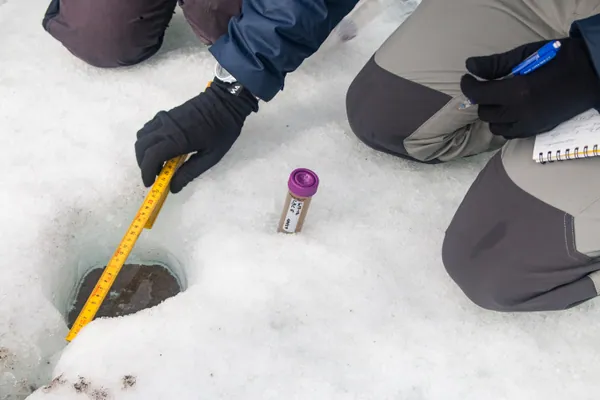
Have you ever noticed a snow-covered street dimpled with little holes on the surface? Called cryoconite holes, they are small circles of black dust, soot, or dark microbes that form on blankets of snow. The dark patches absorb more sunlight than the nearby white snow, warming and melting holes beneath itself. These holes can be tiny unique ecosystems for arctic life. They may also impact glacier loss.
The glaciers of Kashmir are melting at frightening rates. A new study is the first to examine how that melt relates to cryoconite holes. Scientists examined Machoi glacier, a special region that has been photographed since 1875 due to its beauty. These historic photos combine with satellite imagery to reveal that the ice sheet has been receding for the last 100 years.
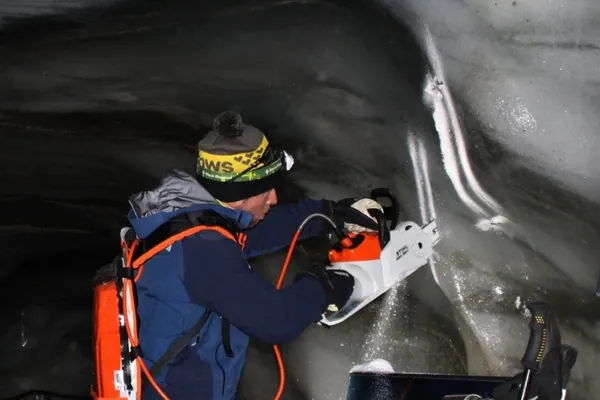
Scientists revealed that cryoconite holes lead to a loss of albedo, or reflection of sunlight. This then causes an increase in temperature at certain points that exacerbate glacier melting. The study also determined that that during the COVID-19 lockdowns, aerosol pollution levels drastically decreased on the glacier. Those same pollutants, when they land in snow, may act as sites where cryoconite holes begin to form, though the science of that process is still developing. Thus, air pollution from traffic and industrial plants may increase cryoconite holes formation, which further melts our glaciers. The study urges future researchers to pay more attention to cryoconite holes and reveal their effects on glacier biogeochemistry.
A dark network of human activity operates in critical monarch butterfly habitat
A new study exposes the logging and corruption that threatens Mexico's Oyamel forest
Ecology
Rafael Saldaña on Flickr (CC BY-2.0)
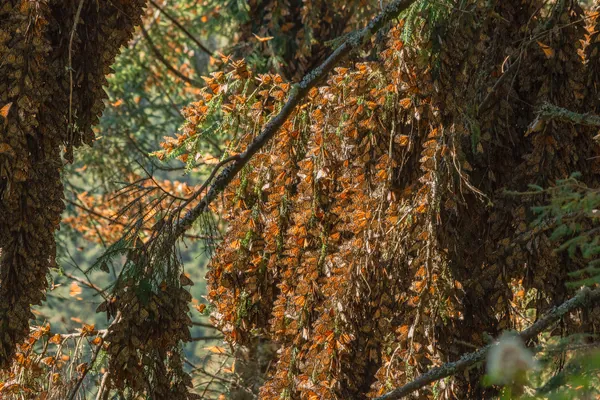
Every autumn, monarch butterflies migrate magnificently from northern America and Canada down to the Oyamel forests of Mexico. The butterflies congregate on Oyamel fir, or ‘sacred trees’, so densely that their collective weight can break off branches. Protecting Oyamel forests is critical to protecting monarchs.
However, protecting the Oyamel forest protection is complicated, as illustrated by a study recently published in the journal World Development. The study investigated the complex and dark network beneath the Monarch Butterfly Biosphere Reserve (MBBR) by conducting semi-structured interviews with locals, government workers, and NGO workers. It found that cartel members often log trees from monarch habitat, then work in concert with corrupt government officials, who authorize the conversion of the newly deforested land into avocado plantations.
The study also highlighted a paradoxical and important concept in ecosystem conservation: that of socioecological frontiers, which are a novel system of human-environment interactions. The MBBR was established to protect Oyamel forest by making it a “people-free” zone, but this seemingly good intention has had negative impacts on local people. Their traditional ecological practices became prohibited, making the forest less healthy. Moreover, local people are caught in an oppressive web of market demands, government corruption, and cartel activity, which all dictate the use of a forest that was previously theirs to sustainably farm.
This study presents a nuanced look into the world of corruption in the MBBR. As an entity supported by UNESCO and the World Wildlife Federation, the reserve may seem innocuous and even admirable from the outside. However, even though it has good intentions, the MBBR may be allowing corrupt government and cartel members to work together to destroy monarch habitat, all whilst simultaneously marginalizing the Indigenous peoples within it.