A 540 million year-old microscopic protist sex mystery is solved
Read now →How tiny, shelled protists reproduce helps explain their strange evolutionary patterns
How tiny, shelled protists reproduce helps explain their strange evolutionary patterns
The week will showcase Black scientists from every imaginable marine science niche, with the goal of inspiring younger generations

Oceanography and Marine Science
University of California, Davis
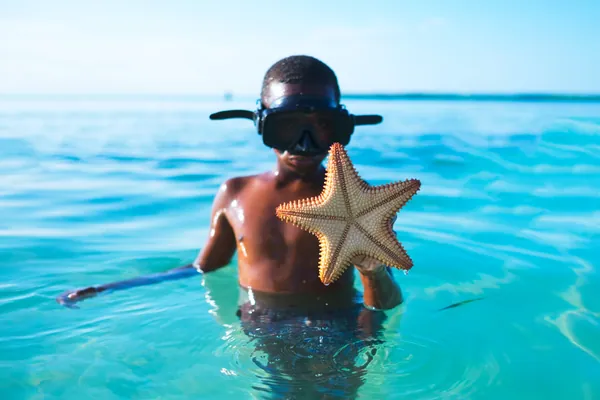
Photo by Claude Piché on Unsplash
Following the harassment of Christian Cooper in Central Park in May 2020, Black birders created #BlackBirdersWeek to celebrate Black nature enthusiasts and highlight their belonging in outdoor spaces. Since then, dozens of campaigns have emerged to amplify and appreciate Black academics, scientists, and naturalists.
Next up is #BlackInMarineScienceWeek, running from November 29th to December 5th. Led by founder Dr. Tiara Moore and organizers Amani Webber-Schultz, Dr. Camille Gaynus, Carlee Jackson, Al Troutman, Jasmin Graham, Jeanette Davis, Kris Howard, Leslie Townsell, Kaylee Arnold, and Jaida Elcock, this week represents an opportunity for community building and improved representation.
“There are few Black folks in ecology and even fewer in marine ecology,” says Arnold, a science communicator and disease ecologist. “The network that I’ve gained through organizing this week is phenomenal. Meeting other Black marine scientists and showing that to the world, especially young Black folks, is a way to say we exist, we’re here. We have a full day dedicated to young kids, which is unique and exciting.”
The organizers hope that the week will help normalize Black folks doing marine research, inspire younger generations, and remind everyone to check their preconceived notions.
"When I say I study sharks people seem concerned about my swimming or my hair, [and] sometimes respond with 'Oh, that’s super interesting'... I don’t know if that's because it's unusual for people to study sharks or because I’m Black and I study sharks,” recalls Elcock, an elasmobranch movement ecologist, science communicator, and co-founder of Minorities in Shark Science. “Science is for everybody. People say there isn't diversity because [Black] people aren’t interested... that’s clearly not true… there’s a whole week dedicated [to it]."
Discussion this week will address the fact that exclusion, not lack of interest, led to today’s lack of representation. Centuries of segregation and underinvestment in Black neighborhood pools led to, and are perpetuated by, these incorrect and harmful ideas.
“My grandparents and my mom said there were just no pools for her to go to... I had a very different experience. Despite people trying to push us out of the water and science, we persevered, and now we get to break down those stereotypes,” notes Arnold.
Black in Marine Science Week is here to do just that, showcasing organizers and participants from every imaginable marine science niche, all shaping how society views the oceans and its inhabitants.
“There's more Black folks than even we know and are showcasing. I hope that if the media picks up on the number of us as well, and has better representation. Seminar series are extremely white, and now you have a resource of people you can invite instead,” emphasizes Arnold, pointing to the necessity of non-Black marine scientists to step up and ensure representation continues beyond this joyous and educational week.
Seagrass meadows lock "blue carbon" away in mud and sand
Oceanography and Marine Science
University of California, Davis
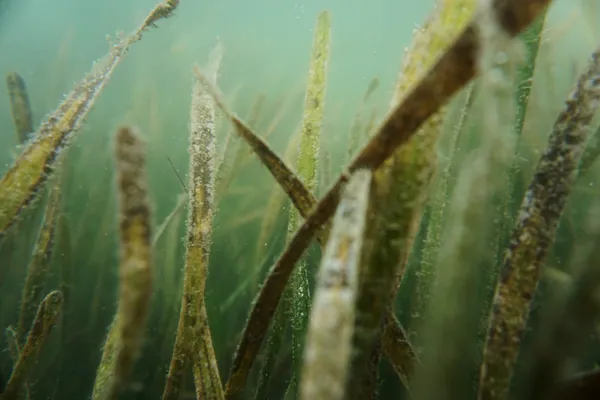
Photo by The Tampa Bay Estuary Program on Unsplash
Carbon dioxide captured and stored in the ocean is called blue carbon. Seagrass meadows, in particular, are important blue carbon sinks, storing massive amounts of carbon in mud and sand for hundreds to thousands of years. Seagrass meadows are large shallow-water areas where the seafloor is covered with seagrass growing in mud or sand. By keeping the carbon out of the atmosphere, they help regulate our climate system. However, a recent study of an Australian estuary found that seagrass meadows are not all equally good at storing carbon.
When the researchers of this study analyzed mud and sand samples from in the seagrass meadow, they found huge variation in its ability to store carbon. Their analysis revealed that carbon storage increases with a higher proportion of mud and carbon inputs from local, non-seagrass sources such as runoff from nearby land. The lead author of this study and a postdoctoral scientist in the research group I work in, Aurora Ricart, said, "this and similar studies will improve quantification of seagrass carbon stocks and tell us more about their capabilities as global carbon sinks."
With better characterization of high carbon storage seagrass meadows, governments can determine which meadows need protection. This will secure their ability to store carbon long into the future, helping mitigate climate change.
Scientists uncover yet another negative impact of climate change on the world's oceans
Oceanography and Marine Science
University of California, Davis
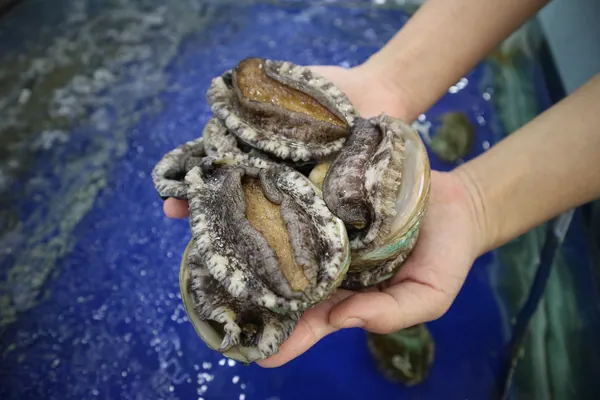
24hseamart on Pixabay
As carbon dioxide emissions dissolve into the oceans, seawater carbonate (CO3) concentrations decrease. In the future, low CO3 concentrations will threaten the survival of ecologically and economically important shellfish, as they struggle to find enough carbonate to build their calcium carbonate (CaCO3) shells. With these concerns in mind, a study published in December of 2019 in the journal Marine Biology looked at how juvenile abalone (Haliotis tuberculata), a type of sea snail, are affected by low carbonate seawater.
To examine how low seawater carbonate affects abalone physiology, researchers cultured six-month-old juvenile abalones for three months in seawater with various levels of CO3, representing current and predicted near-future conditions. They measured and compared survival and growth of the abalone, as well as the micro-structure, thickness, and strength of their shells, across a range of CO3 concentrations.
After three months of exposure, they found that the lowest seawater CO3 treatment significantly reduced the length, weight, and strength of the abalone shells. Through scanning electron microscopy, they also observed that low CO3 resulted in more porous shells with modified textures.
These findings confirm that low CO3 levels in seawater make it more difficult for H. tuberculata to build their shells, resulting in slower growth and increased shell corrosion. Abalone and other shellfish are hugely economically and ecologically important, and this study reveals yet another projected negative effect of climate change on the world's oceans.
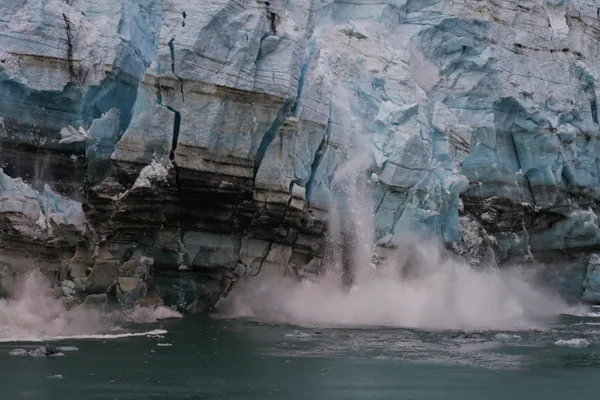
The ocean is acidifying, Western Europe will chill, crops will fail, and that's just the start
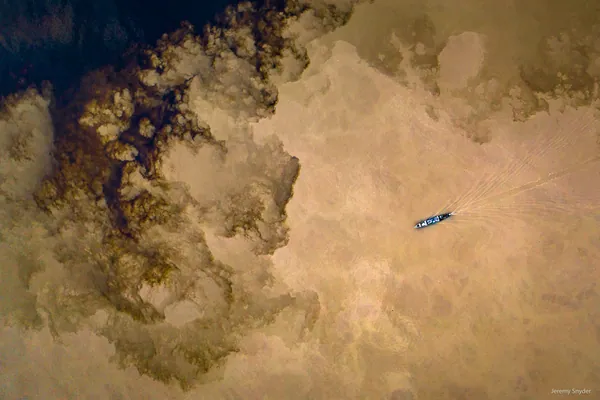
Life depends on the minerals and sediment rivers carry down from the Andes