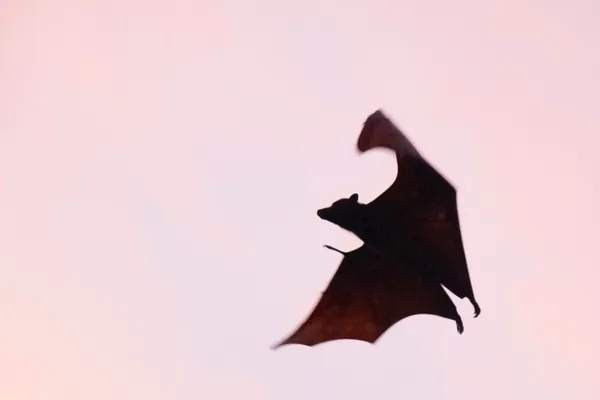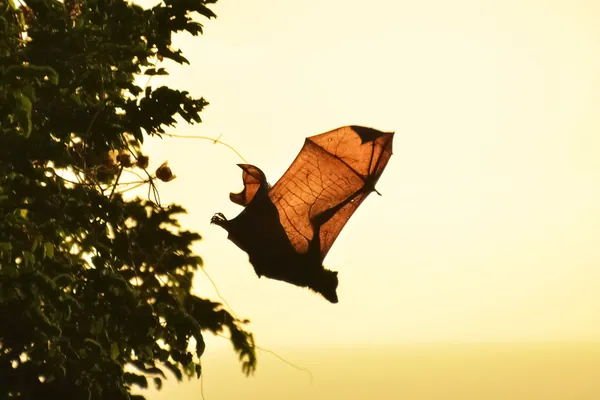
Bats are born knowing the speed of sound
Read now →Researchers raised bat pups in helium-enriched air to test their hypothesis about what, for bats, is innate and learned
Researchers raised bat pups in helium-enriched air to test their hypothesis about what, for bats, is innate and learned
Scientists look to bears' genes for answers

Animal Physiology
University of Winnipeg
Forest Wander/Wikimedia Commons
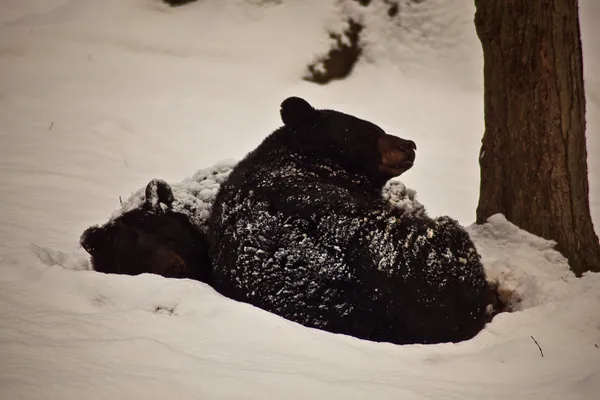
In humans and some animals, long periods of physical inactivity can lead to osteoporosis, a disease where bones break down and become weak. Osteoporosis is usually caused by either bone not being formed or an increase in bone resorption (where components of bone are reabsorbed into the body). But bears are inactive for 4-6 months of the year during their winter hibernation periods, yet they do not develop osteoperosis. New research, published in Scientific Reports, explores how black bears manage to escape this fate.
During hibernation, black and grizzly bears (Ursus americanus and Ursus arctos horribilis) are known to decrease their metabolic rates by about 20-75 percent to save energy, relying solely on fat stores as their energy source. This new study shows that when bears reduce their metabolism, genes involved in bone resorption become less active. Additionally, there is no increase in the gene expression associated with bone formation or osteoblasts (cells that make bones). The researchers also found evidence of that genes involved with energy production from bone and bone marrow become more active during hibernation, which may provide the bears with an additional energy source during fasting.
Northern long-eared bat, little brown bat, and tricolored bat populations have declined by 90 percent
Animal Physiology
University of Winnipeg
US Fish and Wildlife via Wikimedia Commons
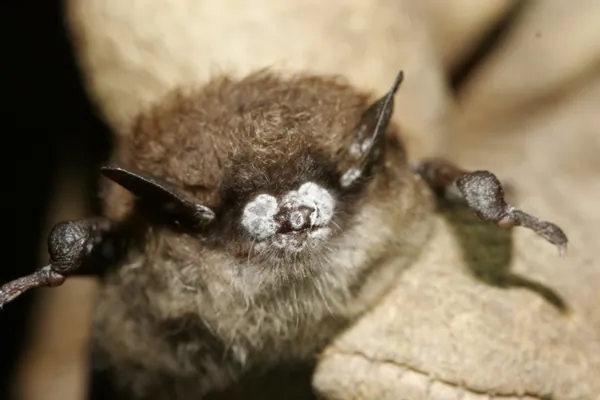
A challenge of studying many wildlife diseases is to understand the impact on widespread populations, and bats species are no exception. A total of 45 bat species are known in North America, with 25 of those species relying on hibernation to survive winter. Since 2006, a fungal disease called white-nose syndrome , which kills bats during hibernation, has devastated populations as it spreads across North America. In Canada, three hibernating species are listed as federally endangered, however in the US, those same three species are undergoing status assessment.
The full impact of the spreading disease was unknown; however a new study has provided insight into how devastating white-nose syndrome has become. To figure this out, a large collaborative effort was made from researchers and organizations including the North American Bat Monitoring Program, Bat Conservation International, US Fish and Wildlife Service, and the US Geological Survey.
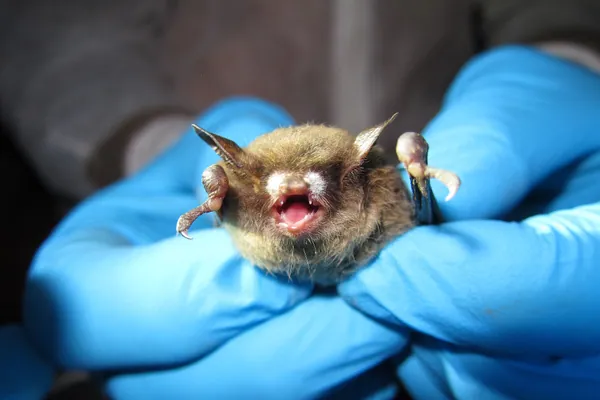
Researchers analyzed population data for five bat species taken between 1995 to 2018 from about 200 sites in 27 US states and two Canadian provinces. They found that three species of bats have declined by over 90 percent (Northern long-eared bat, Myotis septrentionalis; little brown bat, Myotis lucifugus; and tricolored bat, Perimyotis subflavus). Declines for the two other species studied (Indiana bat, Myotis sodalist; big brown bat, Eptesicus fuscus) we less severe, but are still of great concern.
They can warm themselves up faster than any other mammal, increasing the odds that they escape incoming predators
Animal Physiology
University of Winnipeg
Imagine waking up in a panic from a deep sleep in response to a predator in the area. Now imagine doing that but having to rewarm your body temperature back to a normal level in order to flee or fight off the predator. This is exactly what silver-haired bats (Lasionycteris noctivagans) do, and surprisingly they are able to do it the quickest out of any mammal measured to date.
To figure this out, I and other researchers at the University of Winnipeg measured body temperature changes in response to an acute stress in three different situations. The first was during the night as the bats were out searching for food, the second was under normal resting conditions during the day, and the third was during the day when the bats were cold (torpid). In all cases, we measured body temperatures immediately, then measured them again after five minutes of handling. The handling induced the same stress response the bats would have when accosted by a predator.
Surprisingly, we found that bats feeding in the night decrease their body temperature in response to handling, potentially to avoid overheating. Bats resting during the day increased body temperatures moderately, as expected. Very surprisingly, however, body temperatures increased extremely quickly when they were cold. This quick response in body temperature change may reflect this species' ability to deal with predators and people.
Recent scientific evidence shows that conservation programs could harm monarch populations if done at large scales