Es tiempo de incluir a nuestros amigos, los hongos, en nuestros microbiomas
Read now →El microbioma de nuestro intestino contiene hongos y protistas, no solo bacteria – entonces, ¿por qué no los estudiamos?
El microbioma de nuestro intestino contiene hongos y protistas, no solo bacteria – entonces, ¿por qué no los estudiamos?
Our gut microbiomes contain fungi and protists, not just bacteria - so why don't we study them?
While the #StudentBan is not a threat right now, the shortcomings that it exposed still are
Mycology
University of New Hampshire

Photo by Nareeta Martin on Unsplash
Eight years ago, I was packing my home and entire life in Mexico to move to the US to pursue a PhD in Ecology and Evolutionary Biology at the University of California-Irvine. Those were easier times, although it did not seem like it at the time. I spent a few months worth of income to pay for paperwork to apply for an F-1 student visa, and to pay for other documents to enroll as a graduate student. This was after I dedicated months to emailing professors everywhere in the US, hoping that one of them would reply to my email and would invite me to apply to join their lab. It was also after spending time and money paying for standardized tests, official document translations, and application fees. It was a one-and-a-half-year process but in July 2012, I was finally moving to the USA to pursue my PhD. It was a dream come true.
It was also a dream come true for the University of California because I had a full scholarship from my home country that paid for the entirety of my international tuition and fees, which were around $35,000 per year. My scholarship allowed me to pursue my PhD in the USA, and to UC Irvine it provided basically “free labor” as well as prestige.
I paid taxes and did all of the typical graduate student responsibilities. I also dedicated a lot of my time to doing outreach to bring science to underserved communities around Orange County and Southern California. By the time I graduated in 2017, I was a stellar student, with three publications with UC Irvine's name on them. I co-organized summer science camps for middle school girls that brought money and a good reputation to my university and program. I mentored students of all ages. I was a good “citizen” of my program, of my university, and of Orange County.
Like me, most international students leave their families and everything that they are comfortable with to pursue the dream of graduate school. They bring with them the hope of being welcomed and treated fairly by their American peers. I have experienced this, but I am one of the lucky ones.
It is no secret that international students and postdocs will withstand abuse and other injustices just so they can keep their visa, which is always tied to their university. Many universities receive international students without having a system to deal with the unique challenges that international students face, such as having no credit history, which complicates finding a place to live and leaves international students vulnerable to landlord abuse. Many international students are people of color, and universities, especially predominantly white institutions, do not have resources to ensure safety of these students within the university and in the community at large.
These challenges are further complicated due to a lack of community and support. Making friends in the US, especially if you are coming from Global South countries and/or non-Westernized countries, is extremely challenging. Many times, I have seen how western Europeans, Australians, and Canadians are rapidly accepted in the local community, while many Latinx, Asians, and Middle-Easterners are not.
There are over one million international students in the US. The ICE Student Ban may no longer be a threat, but universities still need to change how they handle international students. We are people too, but many universities have historically valued us only by the amount of money we bring. We improve higher education not only by the money that we bring, but by our unique perspectives, our research productivity, and our willingness to give back to American society.
Indigenous people kept them as pets and traveled with them over 1000 years ago
Mycology
University of New Hampshire
Adriana L. Romero-Olivares
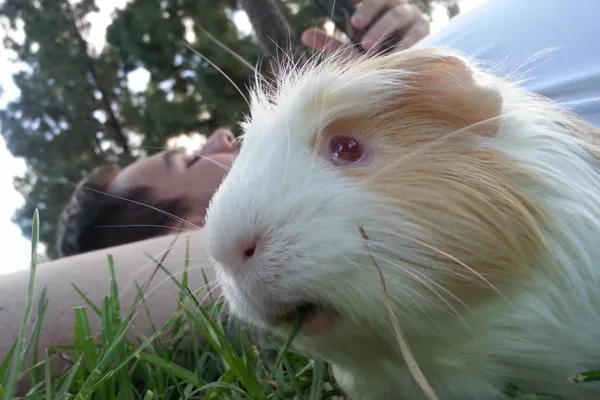
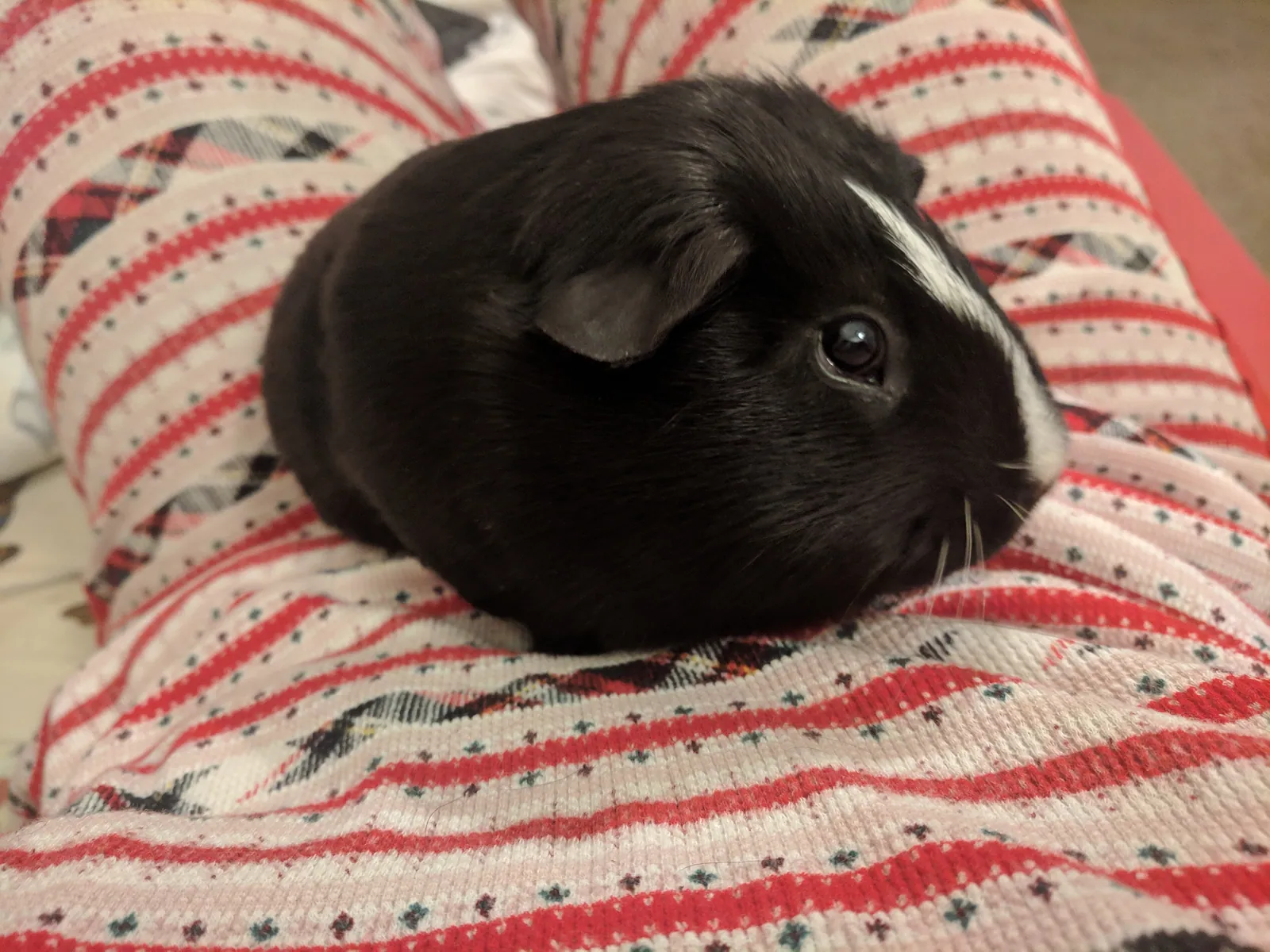
Guinea pigs are pets, they’re culturally important, they're food, they're therapy animals, and they are “guinea pigs” in scientific research. You may have seen or heard of them, and wondered if they're enormous hamsters, or just pigs from Guinea — but they are none of these things. Guinea pigs are domesticated rodents from the Americas and they’ve been associated with humans for up to 7000 years.
Guinea pig trade outside of the Americas, started in the late 15th century when Europeans introduced them to Europe as “upper-class” pets. Three centuries later, medical researchers started to use them as laboratory animals for study, and now, guinea pigs can be found almost anywhere in the world. Because of this, guinea pigs make an excellent tool for understanding human history and our relationship with domesticated animals.
Guinea pig
Adriana L. Romero-Olivares
In a recent study, scientists looked at ancient DNA from guinea pig specimens recovered from archaeological sites in Latin America, the Caribbean, Europe, and the United States. They found that guinea pigs left South America, and into the Caribbean, around the 6th century, through existing human networks and trade routes. The work provides some of the earliest evidence of guinea pig domestication and distribution, over thousands of years ago and across long-distance continents far before Europeans arrived in the Americas.
The idea that they’re low maintenance “starter pets” is a huge misconception. They are charismatic, have their own personalities, are extremely vocal and social, eat a lot, poop a lot, and need to be cleaned a lot. But as a guinea pig pet owner, my life has been brightened by guinea pigs for over 15 years. I plan to have guinea pig pets until the day I die. And in doing so, perpetuating a strong bond and evolutionary history dating back thousands of years. Thank you guinea pigs, for teaching us so much.
But there are steps allies can take to help

Mycology
Purdue University
Mycology
University of New Hampshire
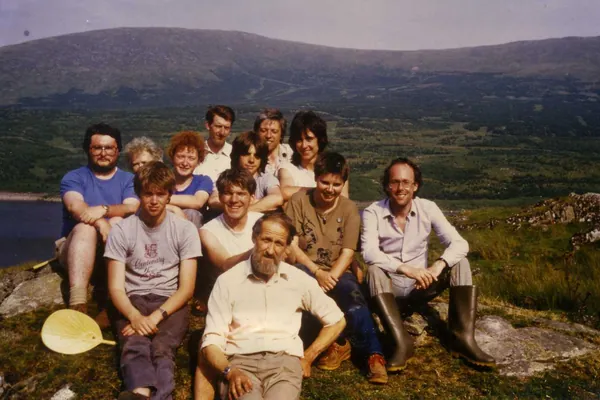
Jim McDougall via Flickr
Many of us biologists conduct fieldwork in diverse places, from Alaska to the tropics, from aiming to understand how microbes are responding to climate change in the boreal soils to learning about life history strategies and co-evolutionary arms races of bats, their ectoparasitic flies, and the ectoparasitic fungi living on those flies.
The days before fieldwork tend to be hectic: make a checklist to make sure you have everything you need, think about a plan B (and a plan C, just in case), anticipate drawbacks and plan on how to address them, and the list goes on and on. The day comes. You make it to your field site, you collect the samples you want, obtain the data you need, everything works out just like planned, and you make it back to the lab — safe, on time, and without going over your planned budget. This is how it should be, but it never really goes like that.
Fieldwork is one of the most exciting experiences about doing research. It is also, in many cases, high-risk. During fieldwork, many things can go wrong, and most of those things cannot be helped. We cannot control the appearances of massive puddles in the middle of the road, critically damaging our transportation vehicles. We cannot control the thunderstorm that makes our study organisms disappear when we finally arrive at a remote field site after hours of climbing a mud-covered mountain.
Sadly, this is not always the case for threats to our integrity as human beings, and we, as a scientific community, have done far too little to address this problem. People from underrepresented groups in the sciences such as people of color, women, and those who identify as LGBTQIA+ or gender nonconforming often are at higher risk of suffering abuse during fieldwork. This comes in the form of sexual harassment, sexual abuse, discrimination, and intimidation. Scientists who have experienced abuse often fear talking about it because they are traumatized and because they fear retaliation and backlash, especially if the perpetrators of abuse are colleagues or superiors — advisers and people at higher career stage.
In Spring 2018, we carried out an anonymous survey to collect testimonies of what scientists, specifically from the LGBTQIA+ community, experience during fieldwork. The idea for such a survey sprouted from concerns that sexual orientation or gender identity may play an unwanted or unwarranted role in people’s professional career. Especially during fieldwork, when Diversity and Inclusion Offices from our university campuses are far away, LGBTQIA+ researchers are exposed to people who may not agree with their sexual orientation or who do not understand why “he” may want to be addressed as “they.”
Responses revealed experiences ranging from discrimination to situations that made researchers decide to no longer perform fieldwork outside of safe places. This adds a whole new level to fieldwork stress, namely having to evaluate sites for their tolerance towards LGBTQIA+. In one story from fieldwork, men voiced discomfort because an openly gay man would share a room with them while, simultaneously, women felt uncomfortable due to the possibility of having to share a room with someone from the opposite sex. Another survey respondent described that they were fearful to carry out fieldwork in places that are recognized for their homophobic culture. These experiences leave people feeling isolated and rejected.
We present a few strategies that we can instill in STEM fields to avoid cases like these:
1) INFORM PEOPLE ABOUT LGBTQIA+. Erase any misinformation that may exist. For example, a gay man is not a threat to the sexuality of cisgender males. Institutions can facilitate trainings on diversity and inclusiveness and provide information on the LGBTQIA+ community to eliminate negative stereotypes.
2) HAVE SUFFICIENT FUNDING AVAILABLE FOR FIELDWORK. Although sometimes it's unavoidable to share rooms due to limited budget or space, if there is the possibility to do so, provide individual lodging for people traveling to fieldwork or conferences. Especially for those who ask for it.
3) DEVELOP AN EMERGENCY PROTOCOL. As a lab, department, or institution, develop a protocol that scientists can follow as a response to experiencing a threat to their integrity. Protocols like this should be part of a broader departmental or university-wide mission statement about equity in field work. The bar has been set high by this example of a mission statement written by University of California Irvine professor Kathleen Treseder.
4) AVOID INTOLERANT AREAS. It is important to note that this does not only apply to countries like Niger and Tunisia where discriminatory laws expose LGBTQIA+ individuals to the risk of death penalty. It also applies close to home, in the USA, where there is an ongoing debate about public restrooms and which one transgender people and people who identify as gender-nonconforming should use.
5) IMPLEMENT A ZERO-TOLERANCE POLICY. Inform everyone in your lab, department and institution that there is a zero-tolerance policy regarding abuse. A code of conduct with expected versus unaccepted behavior and practices should always be made available through trainings and in field stations.
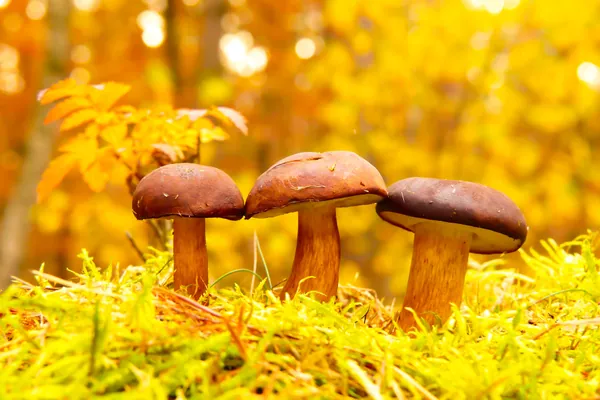
Understanding what climate change will do to belowground ecosystems helps us predict what will happen aboveground, too
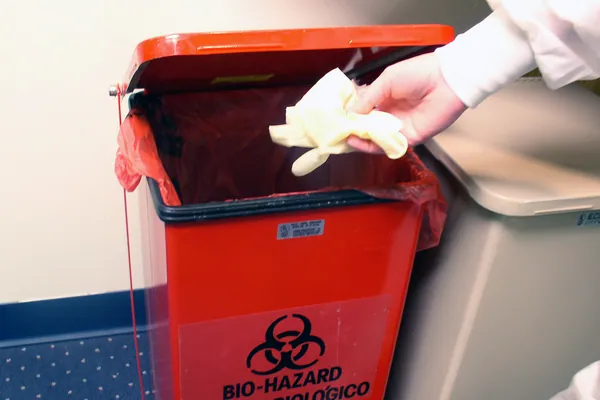
Research institutions need to reflect on their attitudes toward plastic waste and make sustainability a priority in laboratories