How survival of the fittest can look a lot like rock-paper-scissors
Read now →Sometimes ancestors are more "fit" than their progeny
Sometimes ancestors are more "fit" than their progeny
Complex arrangements of these molecules keep the molecular machinery in our cells working properly
The reddish hue of the lake is likely due to iron-rich minerals in the area

Molecular Biology

Photo by howling red on Unsplash
Lakes come in all different sizes, shapes, and even colors: blue, pink, green, and brown.
Now, scientists from the Indian Space Research Organization (ISRO) have reported a reddish-brown colored glacial lake in a remote region in the Northeast Himalayas. Scientists discovered this reddish lake using satellite images taken over the past 20 years.
This high-altitude lake is situated 5060 meters above sea level, near the Zanskar valley, Ladakh in the Himalayan range. It is 11 kilometers (~7 miles) from the nearest village, and covers an area of approximately 0.2 square kilometers — about the size of New York City's Grand Central Station. The lake is being fed by a northeasterly glacier, and the researchers suggest that it has either been formed or expanded due to glacial melt caused by climate change.
The team predicts that the reddish hue of the lake is caused by the dissolution or mixing of iron-rich minerals such as hematite and goethite in the area; a reaction likely catalyzed by chlorine levels in the water or microbial weathering of sub-glacial bedrock. Because of the unique geochemistry in the area, the molecules in the lake are reflecting light at longer wavelengths, giving the lake the reddish color.
The researchers hope to conduct a field study of the lake in the coming summer to better understand the ecology and glacial geochemistry.
During their development, DNA off the ends of their chromosomes are chopped off and destroyed
Molecular Biology
Massimo brizzi on Wikimedia Commons (CC BY-SA 4.0)
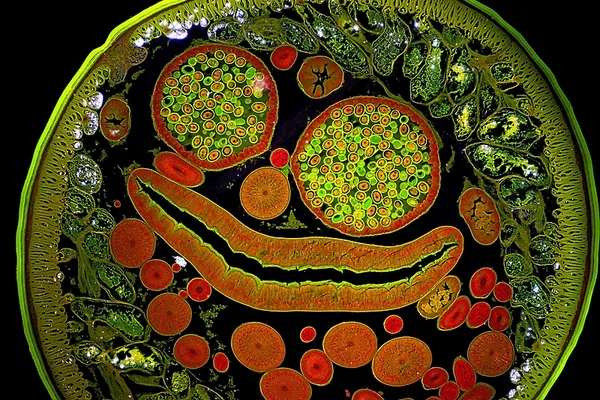
The thought of losing DNA for survival sounds bizarre, but many life forms do this at different stages of their life. For example, the parasitic worm Ascaris, also called the roundworm, loses about 13-90% of its germ cell DNA during their change to somatic cells, which are all of the other cells in the body.
Scientists now looked closer into what kind of DNA sequences are lost and where they go, using sequencing- and imaging-based techniques.
They found that all 24 chromosomes of Ascaris germ cells harbor DNA breaks close to the chromosome ends or telomeric regions. Although most of the DNA in and around the telomeres is lost, new telomeric DNA is attached back to somatic cells.
When they imaged the worm cells, they found broken DNA is densely packed inside of the nucleus by lipid membranes. This packed DNA was evicted out into the cytoplasm, where it was attacked by proteins deployed by the cells to eat waste cellular material (a process called autophagy).
At this moment, it is still not clear why Ascaris cells put in all this extra work to get rid of DNA. One prediction scientists propose is that Ascaris could get rid of DNA only necessary for germ cell function but not useful to somatic cells.
The protein, called Ki-67, has similar properties to our detergents
Molecular Biology

Photo by Andrew Wulf on Unsplash
It might be a bad idea to mix detergents with chromosomes. But new research published in the journal Nature reports how a protein that has surfactant-like properties coats our chromosomes to protect them from other cellular material.
Our chromosomes are enclosed inside the nucleus by a nuclear membrane. When cells are dividing, the nuclear membrane breaks apart until the chromosomes are allotted to each daughter cell, then rebuilt again. Hence, there is a time our chromosomes are exposed to cellular material that is normally kept outside the nucleus (also called cytoplasm). But how the chromosomes are kept clean until the nuclear membrane is rebuilt is not clear.
Scientists found that a protein called Ki-67 has surfactant-like properties – similar to detergents – and sticks to the chromosomes as they start to segregate. Surfactants (or surface-acting-agents) are double-faced molecules that have a water-friendly and an oil-friendly side. This makes them efficient carriers or protectors.
While usually surfactants are made by a combination of fats and water-loving particles, Ki-67 is likely the first protein known to act as a surfactant molecule.
The researchers estimate that ~210 molecules of Ki-67 stick to each per square micrometer of the chromosomes. They stick head-first, keeping their tails facing out to prevent any cytoplasmic material from reaching the chromosomes. Then, when the chromosomes are divvied up and the nuclear membrane is about to be re-built, the Ki-67 molecules help keep the chromosomes clustered together.
This gene is active in newborn mice and gets turned off as they age
Molecular Biology
Our skin rapidly heals our wounds to prevent exposure from infectious microorganisms, but it comes with a price – scars. For example, the hair follicles – the foundations of hair growth in the skin – do not develop completely after serious wounds, leaving visible marks.
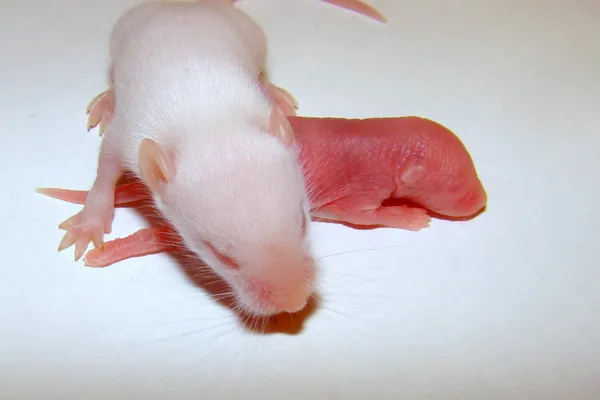
Surprisingly, human fetal skin can regenerate without scars, but we somehow lose this power as we age. Now, scientists found a gene expressed by a specific cell type in the deeper layers in the skin of newborns that supports scar-free regeneration after wounds.
To identify the cell types and molecular factors that guide scar-free skin regeneration, scientists looked at changes in gene expression in the skin of newborn and older mice at single-cell resolution (because mice skin is structurally similar to us). They found different kinds of cells in their analysis. One cell type called fibroblasts caught their eye; these cells are known to support the wound healing process. Although fibroblasts were present in both newborns and older mice, scientists found that fibroblasts from newborns could support the regeneration of hair follicles during the wound healing process. Therefore, they figured that newborns have a special type of fibroblasts that can support scar-free skin regeneration.
They were able to pinpoint the changes in the way genes worked in these special fibroblasts, and a gene called Lef1 stood out. Then, they genetically manipulated older mice to specifically turn on Lef1 levels in the skin fibroblasts. Now backed by the Lef1, fibroblasts of the older skin were able to form hair follicles. Also, the skin regenerated at the wounded area without scars.
Scientists suggest that Lef1 could relay external cellular signals during early development (like in fetuses). Hence, they are now trying to understand what exactly Lef1 is doing in the fibroblasts. They openly shared the genomic data in an interactive website and hope to “develop clinically tractable solutions that promote the regeneration of adult tissue.”
A new study examines the complex molecular signaling that happens in your muscles when you move
Molecular Biology

Photo by Fitsum Admasu on Unsplash
Do you know that our muscle tissue is not made exclusively of muscle cells, but different kinds of cells? These cells communicate with each other by sending chemical signals. This communication is important for normal muscle movement and post-workout recovery. But, until now, no one really understood what the chemical signals that allowed the cells to communicate were.
In an article published in the journal Cell, scientists investigated the signals that kick start muscle changes after exercise in humans and mice.
They found that succinate, a metabolite released by the muscle cells' mitochondria, triggers the communication network. During exercise, a mildly acidic environment is temporarily generated in the muscle cells. This acidic environment activates succinate, which is then transported out of the muscle cells as a messenger.

Then scientists found that another protein (known as MCT1) acts as a portal in the muscle cell wall to channel succinate out of the muscle cells. But this protein portal is selective, and only allows activated succinate to pass through.
In the same way that an antenna receives a signal only when tuned to a particular frequency, cells also need the right receiving proteins (called receptors) to catch the signals. The receptor for succinate, researchers discovered, is not produced by the muscle cells, but by the neighboring cells that support muscle growth and adaptation. Once succinate attaches to the receptor, the signal is complete, which further orchestrates action by many other genes and proteins to support muscle growth and adaptation after exercise.
Astronaut study reveals new intricacies of spaceflight radiation's stress on telomere length
Molecular Biology

Soerfm, CC BY-SA 3.0 / Wikimedia
Astronauts go through intense stresses like microgravity, confinement, and space radiation during space travel. But the aftermath of space travel on astronauts’ health is not clear.
Building on the earlier NASA twin study, two studies report the impact of space travel on telomere DNA (or telomeres), the buffering sequences present at the end of our chromosomes.
Telomeres shorten with age, and shorter telomeres are associated with greater risk of disease. Our cells maintain the length of the telomeres with the help of an enzyme called telomerase. But every time cells duplicate, telomeres tend to get shorter, a sign of aging cells.
To understand the effects of space travel, the researchers report analyzed the DNA in blood and urine samples from 11 NASA astronauts, and compared them with age- and sex-matched controls on the ground before, during, and after spaceflight.
Overall, the radiological scientists observed shorter telomeres after astronauts returned to Earth. Surprisingly, they also observed increased telomere length in the samples collected during spaceflight. (This is a general trend, but individual variations exist.)
The team then tested if telomerase is responsible for increasing telomere length during space travel. But they figured that this wasn’t the case, as telomerase activity was not detected in the samples collected in space. However, they found signatures of an alternative pathway that cells deploy when telomerase is not available, called DNA damage responses. An increase in telomere length during space travel may not be considered as a good sign of longevity, at least for now, because continuous replenishment of telomeres is seen in immortal cells like cancer, stem, and germ-line cells.

NASA
Scientists observed persistent telomere DNA inversions during and after space travel. Inversions occur when DNA breaks and does not repair or reattach in the same way, leading to changes in DNA sequences.
Many factors like stress or radiation-induced DNA damage, diet, and sex of the individual can affect telomere length. Here, scientists were able to positively correlate telomere length with some biological factors like oxidative stress, inflammation, and radiation. But with a low sample number and lack of diversity, scientists state the inability to pinpoint the exact causes.
Understanding the ramifications of space travel on human health is pivotal both for astronauts and future space tourists before stepping into the unknown.
A fluorescent coat protects some species of tardigrade from lethal doses of UV radiation
Molecular Biology
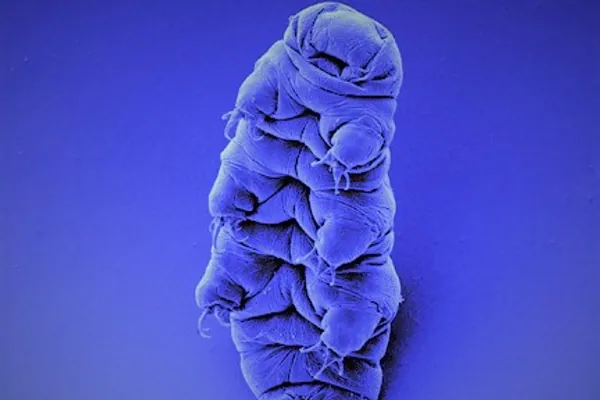
Source photo: Goldstein lab Flickr CC 2.0
Many organisms, from bacteria to plants and animals, produce natural fluorescence. For example, a recent Massive Science lab note illustrates how bananas fluoresce when they ripen. But many scientists are interested in the biological role of such natural fluorescence. Now, scientists report in Biology Letters that some tardigrades (also called water bears) use fluorescence to thwart lethal doses of UV that would otherwise kill many viruses or bacteria.
Scientists serendipitously identified this new reddish-brown species — Paramacrobiotus — when they were gauging different tardigrades collected from moss samples grown on a wall. When they exposed all the collected tardigrades with germicidal doses of UV, most of the Hypsibius tardigrade species died in 24 hours, but the Paramacrobiotus species survived. They also figured that 60 percent of Paramacrobiotus survived even after 30 days of exposure to four times more UV.
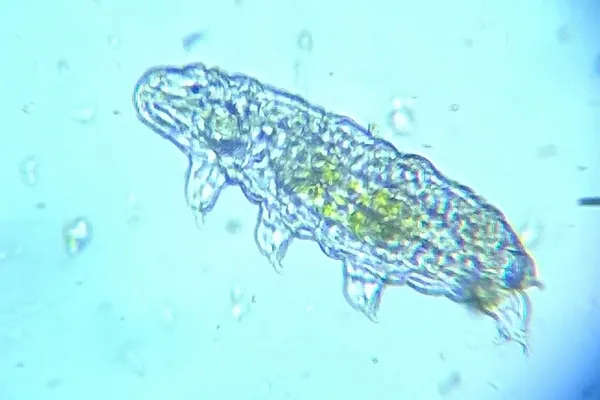
Surprised, they investigated further into what supports Paramacrobiotus survival. When they looked at all the tardigrades under a fluorescence microscope, they found that Paramacrobiotus species fluoresce more than Hypsibius, and this fluorescence increased with exposure to UV. They then extracted the fluorescing material from Paramacrobiotus to coat the Hypsibius and several other worms (Caenorhabditis elegans). They found that the fluorescent coat protects the Hypsibius species and other worms from lethal doses of UV at levels twice that of their uncoated peers.
Tardigrades can withstand extreme environmental stress and can even survive radiations in outer space. Such environmental stresses (like UV) can damage tardigrade DNA. Looks like this new species of tardigrades could have evolved to exploit fluorescence as their natural defense mechanism.
Molecular Biology
Ask a molecular biologist who humans are, and you will probably get this answer: “We are molecules, collectively working together.”
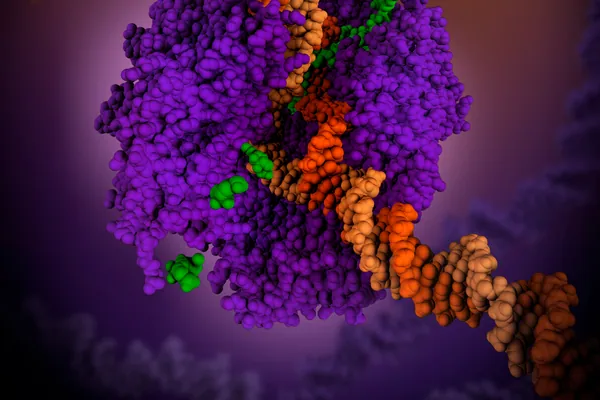
Inside our cells’ nuclei, two enzymes — RNA polymerase I (RNAPI) and II (RNAPII) – carry out the very first step of gene expression: synthesize RNA molecules using the information held in our genes. But inside the nucleus, these two enzymes share different workspaces and workloads. RNAPI makes ribosomal RNA molecules (rRNA) out of ribosomal genes (or rDNA) inside the nucleolus. RNAPII works outside the nucleolus to make pretty much all other RNA molecules.
However, it turns out that this traditional view is not quite right.
Recently, a group of scientists found that RNAPI cohabitates with RNAPII and shares the same workspace — that is, the nucleolus. Not just that, they found that RNAPII Is helped by another protein (Senataxin) to manufacture a molecular shield. This shield facilitates rRNA production and nucleolus organization.
Unlike our other genes, rDNA are clustered together with gaps between two clusters. Large DNA sequences fill these gaps, like a freight train with covered wagons separated by flat wagons.
While RNAPI runs in one direction through the rDNA clusters making rRNA molecules, RNAPII runs in the opposite direction, but exclusively in those gaps. There, RNAPII teams up with Senataxin to construct a strong molecular shield (a triple-helical nucleic acid) to stop RNAPI from jumping into the DNA gaps.
Things went haywire when the scientists tried to stop RNAPII using a mushroom-derived poison or destroy the shield with an enzyme-based technology. Without the shield, RNAPI jumped to the gaps, triggering a chain of unwanted events that ramshackle the structure of the nucleolus.
Interestingly, some tumor cells exhibit a similar mechanism. Is it feasible to track down these unwanted events and disorganized nucleoli and use them as cancer biomarkers? At this moment, this remains an open question.
This transition fundamentally changes their brains
Molecular Biology
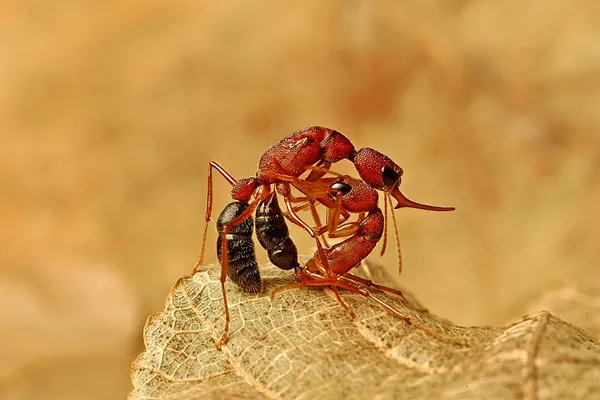
Kalyan Varma on Wikimedia Commons (CC BY-SA 4.0)
Social insect colonies, like those of ants and bees, are divided into castes based on distinct tasks such as reproduction, foraging, defense, and nest maintenance. Individuals belonging to different social castes show distinct molecular, physical, and behavior characters. These are usually established at the larval stage.
But Indian jumping ants (Harpegnathos saltator) are unique. Unlike other ants, Indian jumping ants can switch castes when the reproductive queen dies. In these cases, about 70 percent of non-reproductive workers fight for dominance. Some successfully become reproductive queen-like ants, called gamergates, to ensure the continuation of the colony. This worker-gamergate transition incurs dramatic brain structural remodeling.
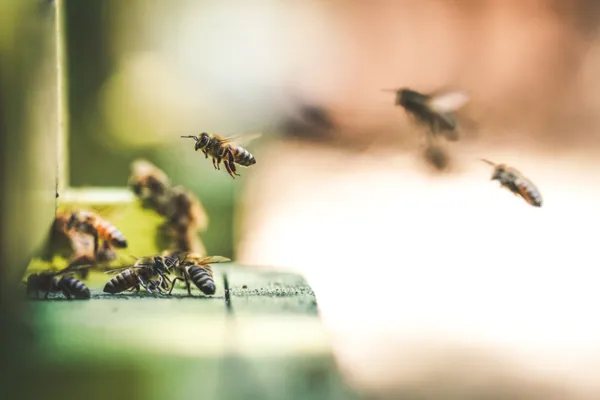
New research published in Science Advances has looked more closely at how the brains of gamergates compare to worker Indian jumping ants. By measuring gene expression changes in the brains of these ants at single-cell resolution, scientists discovered that the number of ensheathing glial cells — supportive neuronal cells essential to brain health and homeostasis — increases by 40 percent during the worker-gamergate transition.
Not only that, when the scientists injured the brains of young Indian jumping ants (from stable or non-transitioning colonies) using needle punctures or antenna ablation, these same cells activated and expressed injury-responsive genes at a higher rate to cope with brain damage.
In ant colonies, reproductive queens live about ten times longer than workers, and gamergates about five times longer than workers. This study found that even older gamergates (~120 days in age) contained significantly more ensheathing glial cells than workers of the same age. (To put this into perspective, 120 days of Indian jumping ant life would translate to about 57 years on a human-age scale.) Older gamergates also expressed higher levels of injury-responsive genes after brain injury. Thus, scientists suggest that ensheathing glial cells protect gamergates from brain damage even in old age.
Yet, Indian jumping ants of all castes are genetically the same, so what makes them inherently distinct? The answer could be epigenetics: the inheritance of biological variation independent of the genetic sequence. Ants — and other social insects — provide a great example to study epigenetics and to explore the relative influence of nature and nurture on their lives.
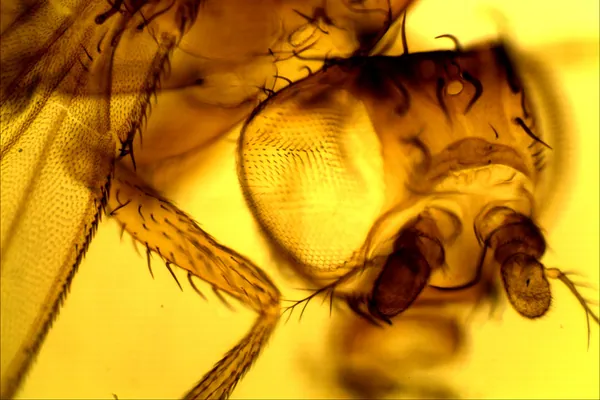
Using fruit flies to mirror the tumors of patients can help with difficult to treat cancers
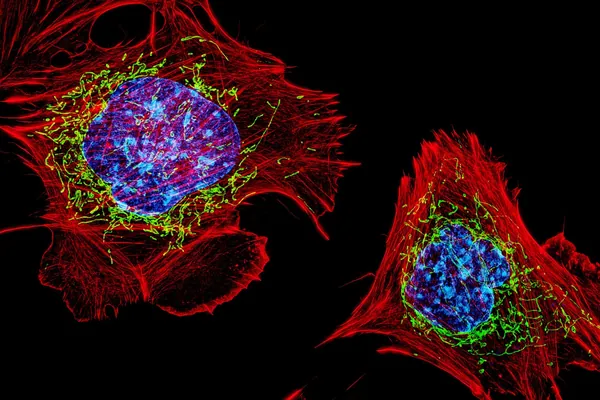
Cells' responses to microscopic pushes and pulls prevent cancers from forming

Mining agencies promise to minimize harm to ocean ecosystems. Scientists say we can't predict its full extent — or how to reverse it
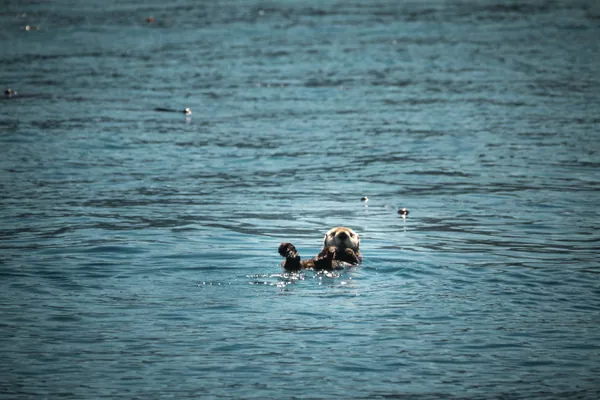
More sea otters are detrimental to fisheries income, but economic gains in other sectors outweigh these losses
Studying these enormous animals requires close collaboration between scientists and aquariums
Human metapneumovirus is a molecular mimic, sneaking past immune systems to cause cold symptoms

These common household and industrial chemicals impair immune system function

The Yarrabubba impact likely sent Earth's climate straight from the icehouse into the greenhouse

Disagreements over Nolan's findings on slowing down bacteria are just part of a healthy scientific process